Tuesday, October 18, 2011

Again with the time off


Pardon our dust while Eric wraps up things from his second endeavor into motorsports.

Read about it here!

Wednesday, October 5, 2011

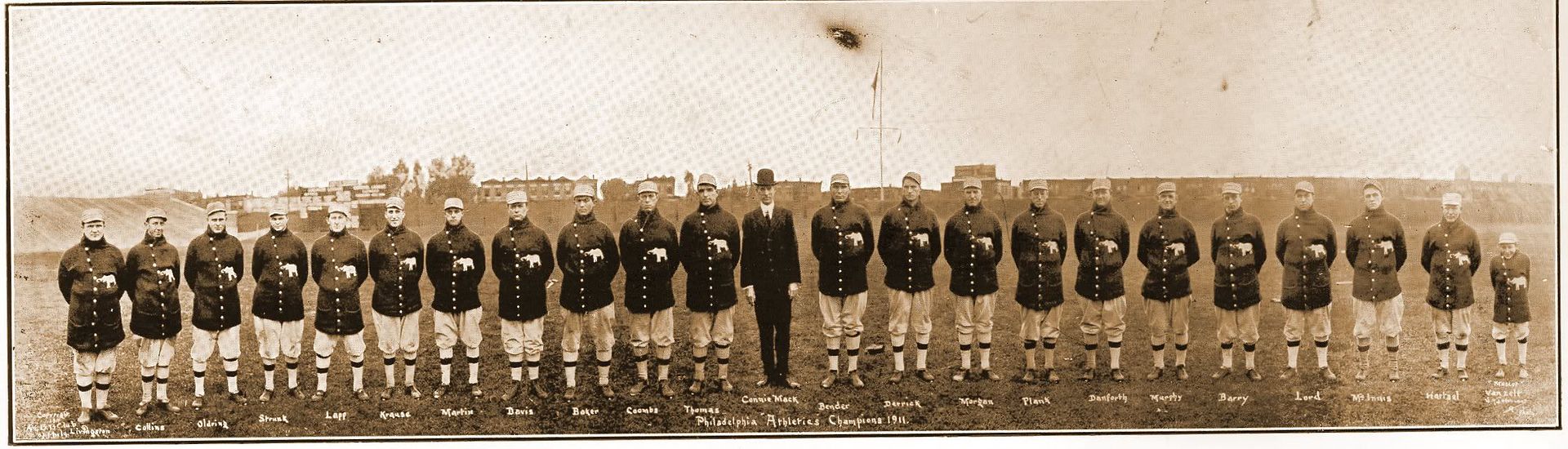
Rube Oldring: Look at his little hat!


Outfielder Reuben "Rube" Oldring was considered by at least one author to be the finest wearer of hats on the entire 1911 Philadelphia Athletics ball club.

Oldring also shared the field with ballists of similarly excellent nomenclature: Ossee Schrecengost, Frank "Home Run" Baker, Stuffy McInnis, Amos "Lightning" Strunk, Bris Lord and Chief Bender.

Perhaps Rube's finest accomplishment was being overshadowed by Home Run Baker's performance in the 1911 World Series.


Read more about Rube Oldring here.

Tuesday, October 4, 2011

Bill Slayback: The last name you wish you had


Surnames are interesting things. In the Scandinavian tradition, the last name was formed by adding a suffix to the father's name. Thus, one of Anders' son would be named Andersen, one of Nils' sons Nilsen, and so forth1. In English traditions, surnames were frequently derived from occupations (Miller, Smith) or from common family characteristics (Armstrong, Goodchild).

If we assume the last name of 1970s Detroit Tigers' pitcher Bill Slayback to be of English descent, we are presented with a linguistic conundrum: Were Bill Slayback's ancestors occupied in slaying backs or in having their backs slain2?

Since Bill Slayback was a mighty athlete who possessed a powerful voice3, this author assumes that his ancestors were (to borrow a phrase from The Means of Columbus, OH) "record holders in the blood purges." Given this [assumed] knowledge, it's easy to envision long-haired Slaybacks hard at work "cleaning out" the royal courts through means consistent with Shakespearean intrigue.

In 2006, Bill Slayback released an album titled "Lady Dancing on Fire" in obvious tribute to his ancestral ability to create innovative ways of smiting4. The title track features a guest appearance by "family friend" Joan of Arc5. The album gained positive reviews from acclaimed music critic Jim Leyland. No, really.


1 Please note that Norwegian and Danish names end in -sen. Only dirty Swedish names end in -son or -sson. And nobody cares about Iceland.

2 This is an English phenomenon known in some circles the "Alaska Laser Wash Vagueity," in which it is unclear whether (A) one should take their car there to be cleaned with a laser or (B) one should take their laser there to be washed.

3 In case you are unable to follow the links, Slayback famously recorded and released "Move Over Babe (Here Comes Henry)" in the offseason after the 1973 season with the help of legendary Tigers' announcer Ernie Harwell. Hank Aaron was just one home run short of Babe Ruth's record at the time.

4 It's claimed that Slayback played and recorded all instruments on the album. That claim has yet to be verified, as Ol' Bill is apparently nowhere on the Internet. If you can find some clips from the album, please link them below.

5 Too soon?

Monday, October 3, 2011

Wilbur 'Rawmeat Bill' Rodgers: Player, manager, amateur dietician


Pregame meals are well-documented among modern ballplayers: Team trainers and dieticians try to keep players looking like well-kept livestock in order to hit stratosphere-scraping home runs or to throw thousands of pitches each season.

But a little-known player/manager pioneered the base ballist's diet nearly 100 years ago. Wilbur "Raw Meat Bill" Rodgers played in the first half of the 20th Century, making appearances for three big-league clubs in 1915 and a few games for the 1916 Cincinnati Reds. I will decline to examine his career much, because NotGraphs has already collected some original footage of his rookie season (with period-correct soundtrack!1) here.

However, Raw Meat spent the majority of his career playing and managing in far-flung semi-pro leagues. His raw talent carried him in his early playing days with the Portland Beavers of the Pacific Coast League. But his talent faded soon and he began to focus on managing clubs in the late 1910s and early 1920s while his batting lines fell into the mid-.200s.

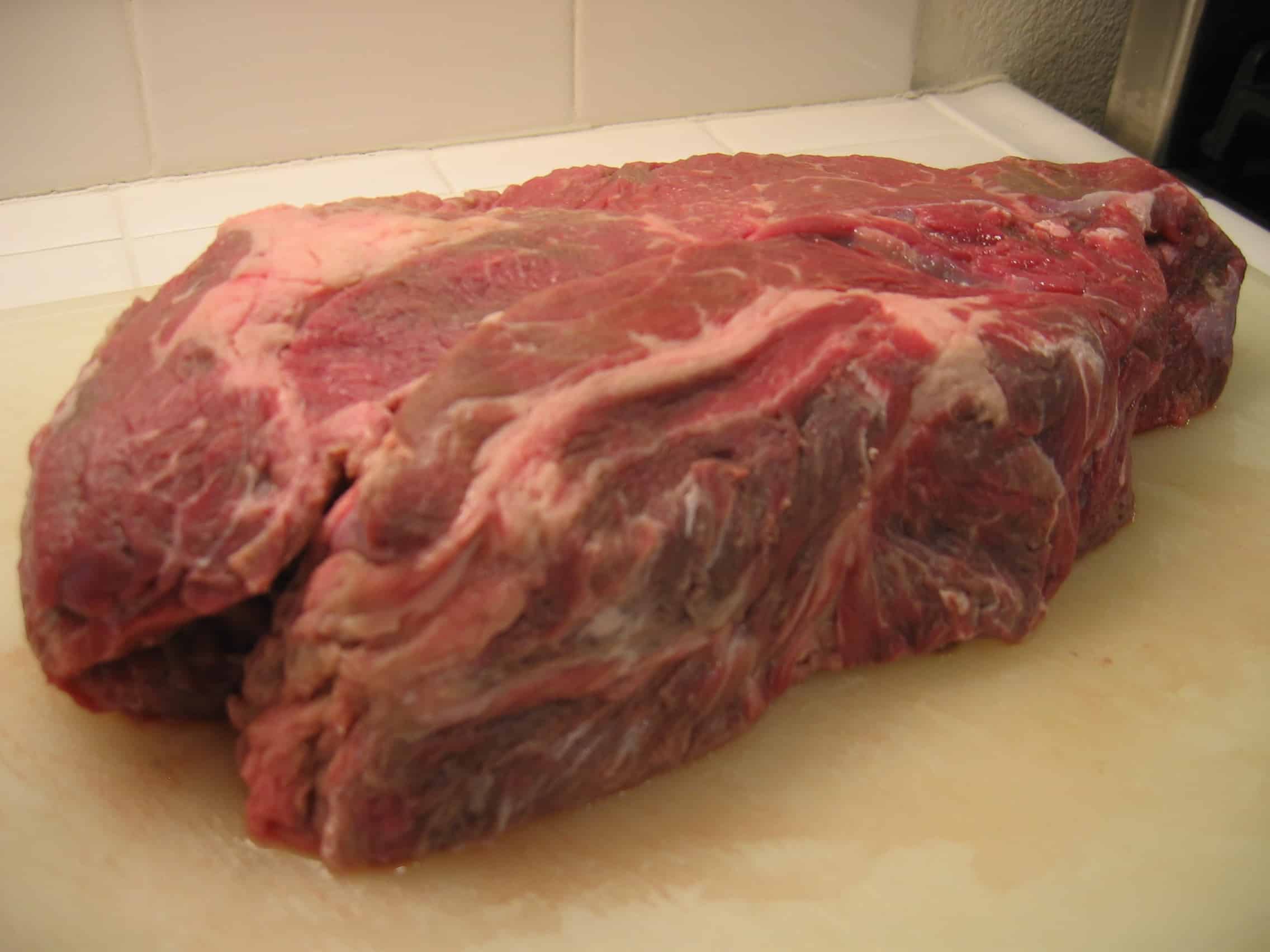
However, a preseason trip to San Bernadino Zoo2 in 1929 changed everything. While visiting the zoological park, a bull bison was erroneously fed 14 pounds of raw chuck3. It rampaged and streamrolled several park visitors. During the tirade, the bull's bloodshot eyes locked with Rodgers'. Wilbur felt the raw power of the bull in the stare and returned its gaze. The bison snorted and rampaged off, crushing a pram or two on its way to a nearby butcher shop.

In an instant, Bill Rodgers knew how to find his swing again: Raw meat, and lots of it. He soon took to a diet of only raw beef and he saw immediate results4. Perhaps it was Raw Meat's bright-red skin, his blind rage, or some other secret unlocked by turning carnivorous, but Rodgers batted over .300 for three consecutive seasons while in his 40s and further intimidated pitchers by gnawing on rival first basemen's forearms, torsos and/or faces.

Wilbur Rodgers insisted that his players follow the Raw Meat diet. The resulting ravenous roster required Rodgers' undivided attention, resulting in his retirement as a player to contain his dugout's bloodlust. Despite the scarcity of affordable meat during the Great Depression, Bill managed a string of hardy 1930s ballclubs with varying degrees of success/heart disease5: the Chattanooga Lookouts, the Des Moines Demons, the Panama City Pilots, the Peoria Tractors, the Sanford Lookouts (twice) and the Charlotte Hornets.

He soon found meat rations largely unavailable during World War 2 and disappeared from the managing circuit until after the war, when he managed the 1946 Peoria Redwings of the All-American Girls Professional Baseball League. The Redwings, apparently unwilling to eat a diet of only raw meat, subsisted instead on a normal diet6. Unable to whip his players into a violent frenzy of bloodlust, Raw Meat was forced to attempt to actually manage the game. He was unsuccessful and the Redwings won a mere 33 games in their inaugural season.

Raw Meat seldom managed baseball thereafter (excluding a one-year stint in the Gulf Coast League in 1951). His whereabouts remained largely unknown, but rumor holds that he eventually turned to cooked meat and championed meat-with-meat-on-the-side meals and meat-inside-of-meat to the rest of America.

When he died in 1981 at 91 years old, an autopsy revealed that he had 113 pints of blood in his body.


1 May not be period-correct.

2 May not actually exist.

3 Bison are, of course, herbivores and typically only eat Herbert Perrys.

4 Like most ballplayers of the era, however, Rodgers' diet was supplemented by the finest meat tonics of the era. But the concentrated nutrimen of beef didn't create the same level of frenzy as raw cow.

5 Through means that were never adequately explained, Rodgers got his hand on 16 years' meat supply for the USS Montana during during his career in Peoria. His ballclubs consumed the rations in 13 months.

6 Rodgers' insistence on sticking with his all-meat diet and the subsequen meat-hangovers actually form the basis for Tom Hanks' character in 'A League of Their Own.'

Thursday, September 29, 2011

Windy McCall: Not a fart joke


Each major league team typically has a "mouth," an outspoken player who is popular with media and fans but occasionally runs his lips a sentence or two too long. As a lifelong White Sox fan, I've heard my favorite club's manager Ozzie Guillen act as the club's mouthpiece for several [too many] years. And Sox catcher A.J. Pierzynski has occasionally acted in such a way, which is actually probably how he found his way to Chicago1.

In most cases, the loudmouth is a veteran who earns teammates' and fans' respect with solid play. But sometimes rookies shoot off their mouths to veterans and get stuck with a nickname (or worse) as the result. John William "Windy" McCall found himself in this situation after trash-talking Ted Williams2 before a Red Sox spring training batting practice session. In an interview soon thereafter, the Splendid Splinter referred to McCall as "the windy one3."

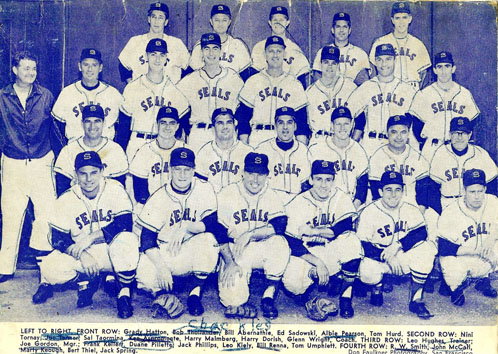
McCall only threw six games for the Red Sox in 1948 and 1949 and two more for Pittsburgh in 1950. He toiled in the minors until 1952 before returning home in 1953 to play for the San Francisco Seals of the Pacific Coast League. Windy turned in the best pitching performance of his career, putting up a 3.05 ERA in 150 innings while splitting his time as a starter and reliever.

The New York Giants took notice and signed Windy McCall for the 1954 season. McCall was the bullpen's mainstay southpaw that year, throwing alongside ace right-handed relievers Marv Grissom and Hoyt Wilhelm. McCall won his first game that year and also made a handful of starts. The Giants claimed the pennant that year, and Windy looked on as Willie Mays made "The Catch4." McCall didn't appear in the '54 World Series, but he didn't really need to; the Giants swept the Cleveland Indians.

McCall made 78 appearances from the Giants' bullpen in 1955 and 1956 and added 10 starts those seasons. The Giants fell apart a bit those years, finishing 3rd and 6th places, respectively.

1957, however, was a different story. Windy struggled in five relief appearances and the Giants cut him loose. He returned to the Seals (in their final year) briefly before signing with the Phillies and finishing the '57 campaign with the Phillies' affiliate in Miami.

The Giants moved to Windy's hometown in 1958, but McCall, ironically, spent the entire season on the other coast in Miami as the Marlins' relief ace5. He threw a bit in 1959 for the Marlins and the Seattle Rainiers of the PCL, but he hung up his spikes after 22 games combined and went into the moving business in San Francisco.

Windy McCall is 86 and lives in Arizona today. His outspoken reputation followed him throughout the game and beyond: Windy gave a lengthy interview in 2006 to the Society for American Baseball Research (SABR), which you can read here. Link


1 The San Francisco Giants apparently did not offer to re-sign Pierzynski when his one-year deal was up at the end of 2004 due to some disagreements with the entire Giants' pitching staff. Also, I refuse to link to any pictures of Michael Barrett throwing a cheap shot after getting railroaded by Pierzynski.

2 A rookie does not simply trash-talk the greatest hitter of his generation. A rookie should probably not even talk to Williams at all.

3 Yes, I wish his nickname was flatulence-related, too.

4 Coincidentally, this post is being published exactly 57 years after Mays's catch robbed Vic Wertz of The Glory.

5 The Miami Marlins were a minor-league team at the time. Some would argue that is still the case. This was probably the Marlins' best highlight of 2011. However, it's fun to watch Mike Stanton hit baseballs5A.

5A Remember when there were rumors of a discussion to send Ozzie Guillen to manage the Marlins for Stanton (Whether or not there were actual discussions depends on who you ask)? I wish I didn't remember that.

Monday, September 26, 2011

Ody Abbott: In the still of the night...or something


"Looks like we're carrying the burden for those teatotalers," he grunted to his partner. The cask they carried clacked against the others as they set it down.

"At least prohibition profits some of us," his partner said. The partner wiped the sweat from his brow, despite the cool autumn air. As they moved toward the next cask, he glimpsed the moon through the cracks in the shed walls. His partner continued, "As long as those dopes outlaw boo-"

"Shhh..."

"What is it?" his partner whispered.

They paused for what seemed like hours.

"I thought I heard something...must have imagined it," he said. "Come on, we're almost done."

As he spoke the last word, the door exploded inward. The moonlight silhouetted an imposing figure in the doorway, his foot outstretched as though finishing a mighty kick. The figure strode into the tiny shed and clasped his hands together with fingers interlaced.

"Well, boys, it looks like business isn't as great as you though," the figure said. "Better put your hands up to the rafters. And don't even think of trying to make me a paperweight; there are enough guns pointed at you that you'd never get a single piece of lead in me.""

The figure lifted the fedora off his brow, dimly revealing his face in the pale glow of the moon. The bootleggers gasped, shouted in unison.

"Ody Abbott!"


...OK, maybe it wasn't that dramatic. But Ody Cleon Abbott lived an interesting life after his cup of coffee with the 1910 St. Louis Cardinals. After playing semi-professional baseball out West and in Canada, Ody enlisted in the army. He served as a sergeant in a training unit during World War I.

Abbott later worked as a deputy sheriff in Washington County (Pa.), his home county. He eventually became the sheriff during prohibition, when he undoubtedly busted thousands of bootleggers. At least, that's what I imagine all police officers did from 1920-1933. Or they took their dirty money.

Either way, if Hollywood has taught me anything, it's that the above scenario ends in a shootout, accounting for Ody Abbott's early demise in 19331.


1 His cause of death was listed as "a heart ailment," which is clearly a euphemism for "shredded by Tommy gun while busting a still."

Friday, September 9, 2011

An author's note


In approximately 107 minutes, Great Names in Baseball contributor Eric will be wed (with the blessing of Ossee Schrecengost, of course). In a few short days, he will travel to the Klondike for a mooning of honey and shan't return until September the Nineteenth.

In the meantime, look for a post or two from GNIB contributor Steve.


*Please note that the Ossee Schrecengost Memorial Hotline for Great Names in Baseball will be inoperable until September the Nineteenth, due to circumstances entirely unrelated to Eric's absence.

Thursday, September 8, 2011

From the GNIB Request Line: Sandy Piez


Today is a most wonderful day, Great Names in Baseball reader(s), for the Ossee Schrecengost Memorial Hotline for Great Names in Baseball1 has been buzzing. And the consensus is reached2: Sandy Piez is the hottest of hot topics.

Charles William "Sandy" Piez played under baseball's best bastard, John McGraw, in his only big-league season for the 1914 New York Giants . He appeared in 37 games, primarily as a pinch runner. As such, Sandy accumulated only eight plate appearances and nine chances as an outfielder. Piez stole four bases in his limited chances and scored nine runs3. Of his three career hits, one went for three bases. He left big-league ball with an impressive .375/.375/.625 batting line (though some statisticians may be dubious of the small sample size). He also tied a major league record with his perfect fielding percentage.

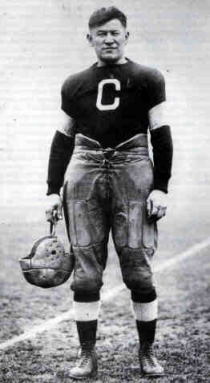
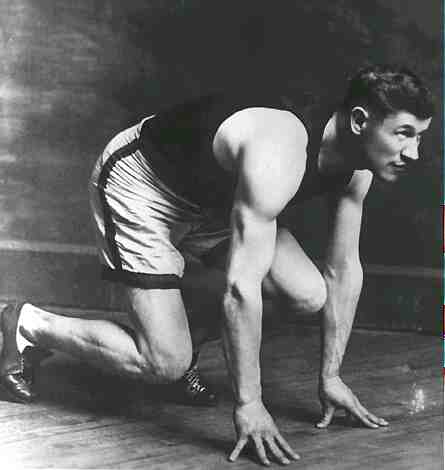
At the time, the Giants rostered two other outfielders on the bench, Dave Robertson and Jim Thorpe. Robertson was the Giants' fourth outfielder in 1914, batting well that year. He would stick around to lead the National League in home runs in 1916 and 1917. Thorpe, the famed multisport athlete, played a role similar to Sandy Piez. Most of Thorpe's 1914 appearances came as a pinch hitter or pinch runner, appearing in 30 games with just 31 plate appearances with just four outfield chances. The crowded outfield led McGraw to keep Robertson and Thorpe, each under a longer-term contract than Piez. The Giants sold Sandy Piez to Rochester, where he would play his final professional season.

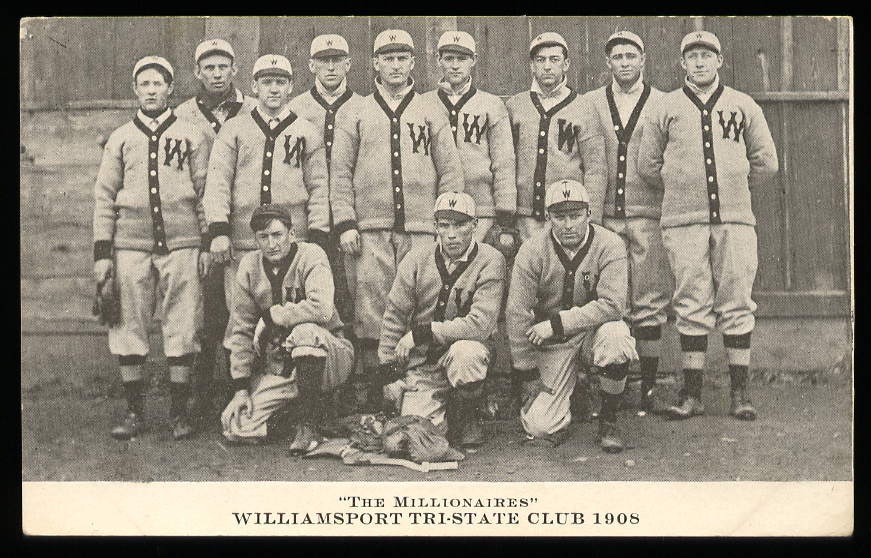
Before and after his single season with the Giants, Sandy played for a number of lesser-league clubs of preferred nomenclature: the Williamsport Millionaires of the Tri-State League4 (Players were paid in soup broth), the Augusta (Ga.) Tourists/Orphans of the South Atlantic League5 (Were the tourists orphaned or the orphans toured?), the Greenville Spinners of the Carolina Association (Competed in competitive leagues of The Game of Life with other cities), the Richmond Colts of the Virginia League (Sponsored by the South rising again) and the Rochester Hustlers of the International League (A dirty, dirty, dirty group of men).

Sandy Piez's post-Hustlers career found him coaching the Rutgers University6 baseball team in 1916 and 1917. After that, he put his baseball cap away for good and became a businessman7 in the Roaring Twenties. However, he met a tragic, Tim Burton-esque end in 1930, when a car he occupied skidded off an icy bridge in New Jersey and fell into the ocean, where he drowned.

Read more about Sandy Piez here.


1 To contact the hotline, please send an email message to osseeschrecengost@gmail.com. One of Ossee's lackeys or some hack writer will read and respond.

2 This request actually comes from a reader who claims Sandy Piez went to his or her high school, so I'll assume that the reader is a Son (or Daughter) of Hammonton, New Jersey. Greetings to you New Jersey-ans.

3 Sandy Piez is one of a handful of players who scored more runs in his career than he had plate appearances. Herb Washington is the most extreme example, as he was a "designated runner" for the Oakland Athletics in 1974 and 1975. Washington scored 33 runs in his career without a single plate appearance or inning of defense. He also played in two games of the 1974 American League Championship Series, getting caught stealing in both games.

4 The 1910 Tri-State League included (among others) the Johnstown Johnnies, Lancaster Red Roses, York White Roses and Reading Pretzels.

5 The 1911 South Atlantic League may be the best-named I've found yet, including Tarpons, Sea Gulls, Commies (!) and Babies.

6 Piez had attended Rutgers University and Bucknell University. His coaching career at Rutgers merited a one-inch story in a tiny corner of a Sporting Life issue.

7 Sandy was no doubt influenced to enter business by his brief stint as a Millionaire.

Wednesday, September 7, 2011

Harry Eells: Slippery When Nicknamed

Slippery Eells (Center). Also pictured: Addie Joss envisioning your slow death by his hand1, Elmer Flick preparing to throttle the photographer with his cleats, Claude Rossman moments before vomiting on the back of Harry Bemis' stupid head2.


People may describe eels in many ways. In various parts of the human world, they may be considered the following words: delicious, limbless, slender, moray and electric.

But none of these was the nickname that stuck with Cleveland Naps' pitcher Harry Eells. Rather, a teammate, classmate, ladymate, first mate or enemymate stuck him with a much finer nickname: Slippery. No other nickname so accurately describes a player's career, for Slippery Eells pitched just 14 times in 1906, his only season in the major leagues. Like trying to catch an eel with bare hands, Slippery's opportunity was fleeting3.

Eells' brief swim in the big leagues netted him a respectable 4-5 record and an average-for-the-era 2.61 ERA. His control sometimes floundered and he walked 45 in 86.1 innings. However, in one of his eight starts, Slippery Eells shut out the previous season's champions, the Philadelphia Athletics4.

Harry Archibald Eells, born in rural Iowa, pitched with great success in 1904 with the Missouri Valley League's Joplin Miners. He moved to Kansas City later that season to pitch for the Blues of the American Association (AA). In a full year with the Blues in 1905, Eells struggled, posting a 7-23 record while walking 135 batters in 279 innings. Oddly enough, someone thought highly enough of Slippery to sign him to play for the big leagues.

He pitched briefly with the AA's Toledo Mud Hens in 1907, but Slippery Eells retired before the season's end to begin selling real estate in California. He died exactly one year before the Japanese attacked Pearl Harbor; one of his three sons served in World War II as a colonel.


Read more about Slippery Eells here.


1Addie Joss is an interesting character in his own right and was a very popular player. The lanky Hall of Famer pitched with a unique corkscrew-sidearm delivery that left hitters bewildered. He once pitched a perfect game on just 74 pitches (allegedly) and occupied himself in the offseason by writing a popular baseball column for the Toledo News Bee. Sadly, his career was cut short by tubercular meningitis, which took his life at just 31. Read his story here.

2 See the actual and entire 1906 Naps team photo here. For the names, check out this forum thread.

3 Apologies for this heavy-handedness.

4 Perhaps it's a coincidence that Eells didn't last long after facing the club of the one and only Ossee Schrecengost.
Addie Joss hung around the big leagues after throwing a perfect game against Schrecengost's club and all he got for it was a plaque.

Tuesday, September 6, 2011

1901 Detroit Tigers: The Kids Are All Right(-Handed)

When I reviewed team rosters from the early century for this blog, I noticed several nicknames persist on teams throughout baseball history, particularly in the early days of the game. It was almost as though the league had sent out a form that read like this:


Place check next to each nickname. Each line must be fulfilled to be allotted umpires and league permission for Opening Day of Base Ball:

_____ Pop
_____ Lefty (Pitcher only)
_____ Doc
_____ Kid
_____ Chief
_____ Chick, Ducky, or Buck (Any is acceptable)
_____ "Big [Player Name]"
_____ "Silent [Player Name]"
_____ Rube or Babe (Either is acceptable)
_____ Cy (Pitcher only)


I've clearly mixed and matched several different eras of the game, but the point remains: These were extremely common nicknames.

The 1901 Detroit Tigers would have fallen short on several names, but they made up for it with an excess supply of one name. The Tigers started three "Kids:" second baseman William "Kid" Gleason, shortstop Norman "Kid" Elberfeld and outfielder William "Kid" Nance.

Kid Gleason famously managed the notorious 1919 Chicago White Sox, though he claimed to know nothing about the Black Sox Scandal. In 1901, Gleason hit a respectable .274/.327/.364 with 12 triples.

Kid Elberfeld batted .308/.397/.428 in 1901, leading the team in all three rate stats. He also drove in 76 runs to lead the team in that category while striking out just 17 times in 508 plate appearances. Nicknamed "The Tabasco Kid" for his burning temper, Elberfeld notoriously assaulted umpires on at least two occasions1. Naturally, he opened a baseball school of some sort after retiring.

Kid Nance played no more after 1901, a campaign in which he hit .280/.355/.373. Ironically, only Nance was under the age of 25 in 1901; Gleason was 34, Elberfeld 26. Nance's B-R mug falls in the "menacing" category of turn-of-the-century ballplayer portraits2. Perhaps he's considering how best to spend his per diem after the game: Carousing with scoundrels or patronizing the brothels.
The Kids (along with a Pop, a Doc, a Sport and Davey Crockett) led Detroit to a third-place finish in the Junior Circuit's inaugural season. It was Detroit's highest finish until Ty Cobb arrived and led the Tigers to three straight pennants (but zero World Series victories3) in 1907-1909. By that time, the Kids had moved on to other American League clubs. Perhaps Cobb's powerful bloodlust led him to kill and eat them (or at least scare them off), much the same way some male animals cannibalize younger males to eliminate competition in the wild. Here is a photo of Cobb immobilizing Kid Elberfeld in preparation for killing. Cobb, ever the capitalist, paid someone else to finish the job.


Read about Gleason here, about Elberfeld here and about Nance here. Click here to see a picture of the 1901 Tigers.


1 Ironically, the American League was founded on the principles of clean players playing a clean game. Elberfeld apparently cared little for this notion.

2 Other categories include the Gentleman, the Faded Crop, the Haunting Eyes, the Near Rampage, the Aloof Slugger, the Stoic, the WTF? and the Jim Delahanty.

3 In the 1907 and 1908 World Series, the Chicago Cubs won their only two World Series. The Pittsburgh Pirates and Honus Wagner bested Cobb's Tigers in the seven games of the 1909 series.