Thursday, September 29, 2011

Windy McCall: Not a fart joke


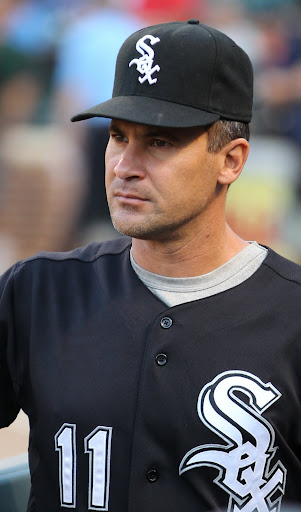
Each major league team typically has a "mouth," an outspoken player who is popular with media and fans but occasionally runs his lips a sentence or two too long. As a lifelong White Sox fan, I've heard my favorite club's manager Ozzie Guillen act as the club's mouthpiece for several [too many] years. And Sox catcher A.J. Pierzynski has occasionally acted in such a way, which is actually probably how he found his way to Chicago1.

In most cases, the loudmouth is a veteran who earns teammates' and fans' respect with solid play. But sometimes rookies shoot off their mouths to veterans and get stuck with a nickname (or worse) as the result. John William "Windy" McCall found himself in this situation after trash-talking Ted Williams2 before a Red Sox spring training batting practice session. In an interview soon thereafter, the Splendid Splinter referred to McCall as "the windy one3."

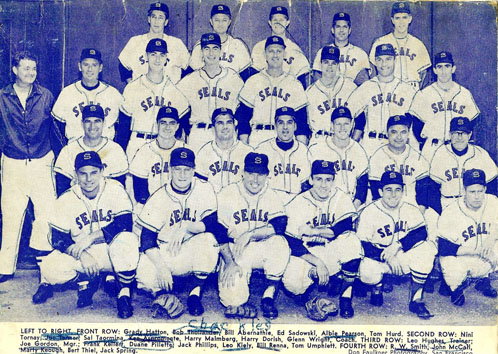
McCall only threw six games for the Red Sox in 1948 and 1949 and two more for Pittsburgh in 1950. He toiled in the minors until 1952 before returning home in 1953 to play for the San Francisco Seals of the Pacific Coast League. Windy turned in the best pitching performance of his career, putting up a 3.05 ERA in 150 innings while splitting his time as a starter and reliever.

The New York Giants took notice and signed Windy McCall for the 1954 season. McCall was the bullpen's mainstay southpaw that year, throwing alongside ace right-handed relievers Marv Grissom and Hoyt Wilhelm. McCall won his first game that year and also made a handful of starts. The Giants claimed the pennant that year, and Windy looked on as Willie Mays made "The Catch4." McCall didn't appear in the '54 World Series, but he didn't really need to; the Giants swept the Cleveland Indians.

McCall made 78 appearances from the Giants' bullpen in 1955 and 1956 and added 10 starts those seasons. The Giants fell apart a bit those years, finishing 3rd and 6th places, respectively.

1957, however, was a different story. Windy struggled in five relief appearances and the Giants cut him loose. He returned to the Seals (in their final year) briefly before signing with the Phillies and finishing the '57 campaign with the Phillies' affiliate in Miami.

The Giants moved to Windy's hometown in 1958, but McCall, ironically, spent the entire season on the other coast in Miami as the Marlins' relief ace5. He threw a bit in 1959 for the Marlins and the Seattle Rainiers of the PCL, but he hung up his spikes after 22 games combined and went into the moving business in San Francisco.

Windy McCall is 86 and lives in Arizona today. His outspoken reputation followed him throughout the game and beyond: Windy gave a lengthy interview in 2006 to the Society for American Baseball Research (SABR), which you can read here. Link


1 The San Francisco Giants apparently did not offer to re-sign Pierzynski when his one-year deal was up at the end of 2004 due to some disagreements with the entire Giants' pitching staff. Also, I refuse to link to any pictures of Michael Barrett throwing a cheap shot after getting railroaded by Pierzynski.

2 A rookie does not simply trash-talk the greatest hitter of his generation. A rookie should probably not even talk to Williams at all.

3 Yes, I wish his nickname was flatulence-related, too.

4 Coincidentally, this post is being published exactly 57 years after Mays's catch robbed Vic Wertz of The Glory.

5 The Miami Marlins were a minor-league team at the time. Some would argue that is still the case. This was probably the Marlins' best highlight of 2011. However, it's fun to watch Mike Stanton hit baseballs5A.

5A Remember when there were rumors of a discussion to send Ozzie Guillen to manage the Marlins for Stanton (Whether or not there were actual discussions depends on who you ask)? I wish I didn't remember that.

Monday, September 26, 2011

Ody Abbott: In the still of the night...or something


"Looks like we're carrying the burden for those teatotalers," he grunted to his partner. The cask they carried clacked against the others as they set it down.

"At least prohibition profits some of us," his partner said. The partner wiped the sweat from his brow, despite the cool autumn air. As they moved toward the next cask, he glimpsed the moon through the cracks in the shed walls. His partner continued, "As long as those dopes outlaw boo-"

"Shhh..."

"What is it?" his partner whispered.

They paused for what seemed like hours.

"I thought I heard something...must have imagined it," he said. "Come on, we're almost done."

As he spoke the last word, the door exploded inward. The moonlight silhouetted an imposing figure in the doorway, his foot outstretched as though finishing a mighty kick. The figure strode into the tiny shed and clasped his hands together with fingers interlaced.

"Well, boys, it looks like business isn't as great as you though," the figure said. "Better put your hands up to the rafters. And don't even think of trying to make me a paperweight; there are enough guns pointed at you that you'd never get a single piece of lead in me.""

The figure lifted the fedora off his brow, dimly revealing his face in the pale glow of the moon. The bootleggers gasped, shouted in unison.

"Ody Abbott!"


...OK, maybe it wasn't that dramatic. But Ody Cleon Abbott lived an interesting life after his cup of coffee with the 1910 St. Louis Cardinals. After playing semi-professional baseball out West and in Canada, Ody enlisted in the army. He served as a sergeant in a training unit during World War I.
Abbott later worked as a deputy sheriff in Washington County (Pa.), his home county. He eventually became the sheriff during prohibition, when he undoubtedly busted thousands of bootleggers. At least, that's what I imagine all police officers did from 1920-1933. Or they took their dirty money.

Either way, if Hollywood has taught me anything, it's that the above scenario ends in a shootout, accounting for Ody Abbott's early demise in 19331.


1 His cause of death was listed as "a heart ailment," which is clearly a euphemism for "shredded by Tommy gun while busting a still."

Friday, September 9, 2011

An author's note


In approximately 107 minutes, Great Names in Baseball contributor Eric will be wed (with the blessing of Ossee Schrecengost, of course). In a few short days, he will travel to the Klondike for a mooning of honey and shan't return until September the Nineteenth.

In the meantime, look for a post or two from GNIB contributor Steve.


*Please note that the Ossee Schrecengost Memorial Hotline for Great Names in Baseball will be inoperable until September the Nineteenth, due to circumstances entirely unrelated to Eric's absence.

Thursday, September 8, 2011

From the GNIB Request Line: Sandy Piez


Today is a most wonderful day, Great Names in Baseball reader(s), for the Ossee Schrecengost Memorial Hotline for Great Names in Baseball1 has been buzzing. And the consensus is reached2: Sandy Piez is the hottest of hot topics.

Charles William "Sandy" Piez played under baseball's best bastard, John McGraw, in his only big-league season for the 1914 New York Giants . He appeared in 37 games, primarily as a pinch runner. As such, Sandy accumulated only eight plate appearances and nine chances as an outfielder. Piez stole four bases in his limited chances and scored nine runs3. Of his three career hits, one went for three bases. He left big-league ball with an impressive .375/.375/.625 batting line (though some statisticians may be dubious of the small sample size). He also tied a major league record with his perfect fielding percentage.

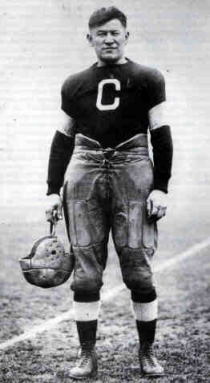
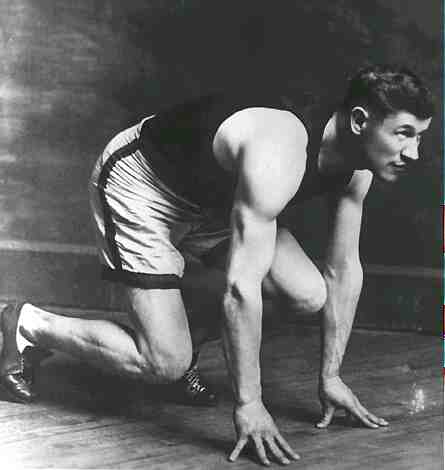
At the time, the Giants rostered two other outfielders on the bench, Dave Robertson and Jim Thorpe. Robertson was the Giants' fourth outfielder in 1914, batting well that year. He would stick around to lead the National League in home runs in 1916 and 1917. Thorpe, the famed multisport athlete, played a role similar to Sandy Piez. Most of Thorpe's 1914 appearances came as a pinch hitter or pinch runner, appearing in 30 games with just 31 plate appearances with just four outfield chances. The crowded outfield led McGraw to keep Robertson and Thorpe, each under a longer-term contract than Piez. The Giants sold Sandy Piez to Rochester, where he would play his final professional season.

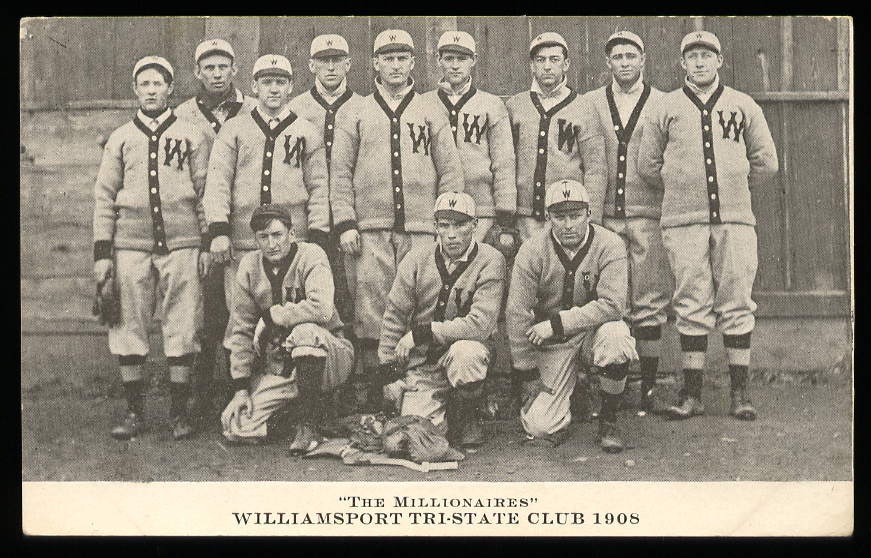
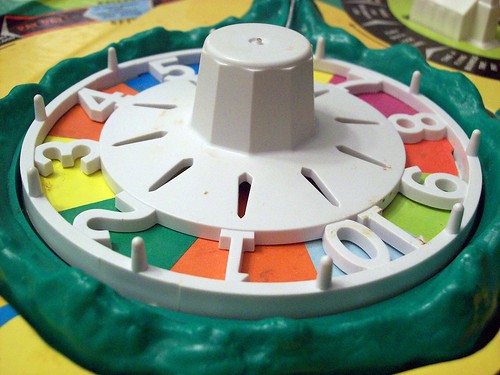
Before and after his single season with the Giants, Sandy played for a number of lesser-league clubs of preferred nomenclature: the Williamsport Millionaires of the Tri-State League4 (Players were paid in soup broth), the Augusta (Ga.) Tourists/Orphans of the South Atlantic League5 (Were the tourists orphaned or the orphans toured?), the Greenville Spinners of the Carolina Association (Competed in competitive leagues of The Game of Life with other cities), the Richmond Colts of the Virginia League (Sponsored by the South rising again) and the Rochester Hustlers of the International League (A dirty, dirty, dirty group of men).

Sandy Piez's post-Hustlers career found him coaching the Rutgers University6 baseball team in 1916 and 1917. After that, he put his baseball cap away for good and became a businessman7 in the Roaring Twenties. However, he met a tragic, Tim Burton-esque end in 1930, when a car he occupied skidded off an icy bridge in New Jersey and fell into the ocean, where he drowned.

Read more about Sandy Piez here.


1 To contact the hotline, please send an email message to osseeschrecengost@gmail.com. One of Ossee's lackeys or some hack writer will read and respond.

2 This request actually comes from a reader who claims Sandy Piez went to his or her high school, so I'll assume that the reader is a Son (or Daughter) of Hammonton, New Jersey. Greetings to you New Jersey-ans.

3 Sandy Piez is one of a handful of players who scored more runs in his career than he had plate appearances. Herb Washington is the most extreme example, as he was a "designated runner" for the Oakland Athletics in 1974 and 1975. Washington scored 33 runs in his career without a single plate appearance or inning of defense. He also played in two games of the 1974 American League Championship Series, getting caught stealing in both games.

4 The 1910 Tri-State League included (among others) the Johnstown Johnnies, Lancaster Red Roses, York White Roses and Reading Pretzels.

5 The 1911 South Atlantic League may be the best-named I've found yet, including Tarpons, Sea Gulls, Commies (!) and Babies.

6 Piez had attended Rutgers University and Bucknell University. His coaching career at Rutgers merited a one-inch story in a tiny corner of a Sporting Life issue.

7 Sandy was no doubt influenced to enter business by his brief stint as a Millionaire.

Wednesday, September 7, 2011

Harry Eells: Slippery When Nicknamed

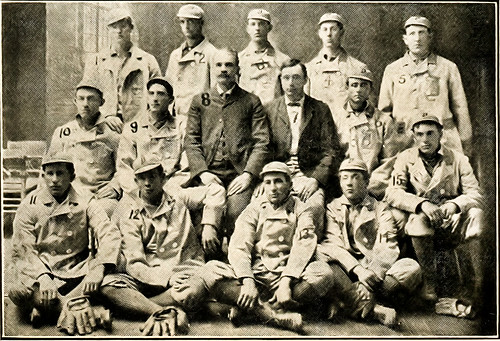
Slippery Eells (Center). Also pictured: Addie Joss envisioning your slow death by his hand1, Elmer Flick preparing to throttle the photographer with his cleats, Claude Rossman moments before vomiting on the back of Harry Bemis' stupid head2.


People may describe eels in many ways. In various parts of the human world, they may be considered the following words: delicious, limbless, slender, moray and electric.

But none of these was the nickname that stuck with Cleveland Naps' pitcher Harry Eells. Rather, a teammate, classmate, ladymate, first mate or enemymate stuck him with a much finer nickname: Slippery. No other nickname so accurately describes a player's career, for Slippery Eells pitched just 14 times in 1906, his only season in the major leagues. Like trying to catch an eel with bare hands, Slippery's opportunity was fleeting3.

Eells' brief swim in the big leagues netted him a respectable 4-5 record and an average-for-the-era 2.61 ERA. His control sometimes floundered and he walked 45 in 86.1 innings. However, in one of his eight starts, Slippery Eells shut out the previous season's champions, the Philadelphia Athletics4.

Harry Archibald Eells, born in rural Iowa, pitched with great success in 1904 with the Missouri Valley League's Joplin Miners. He moved to Kansas City later that season to pitch for the Blues of the American Association (AA). In a full year with the Blues in 1905, Eells struggled, posting a 7-23 record while walking 135 batters in 279 innings. Oddly enough, someone thought highly enough of Slippery to sign him to play for the big leagues.

He pitched briefly with the AA's Toledo Mud Hens in 1907, but Slippery Eells retired before the season's end to begin selling real estate in California. He died exactly one year before the Japanese attacked Pearl Harbor; one of his three sons served in World War II as a colonel.


Read more about Slippery Eells here.


1Addie Joss is an interesting character in his own right and was a very popular player. The lanky Hall of Famer pitched with a unique corkscrew-sidearm delivery that left hitters bewildered. He once pitched a perfect game on just 74 pitches (allegedly) and occupied himself in the offseason by writing a popular baseball column for the Toledo News Bee. Sadly, his career was cut short by tubercular meningitis, which took his life at just 31. Read his story here.

2 See the actual and entire 1906 Naps team photo here. For the names, check out this forum thread.

3 Apologies for this heavy-handedness.

4 Perhaps it's a coincidence that Eells didn't last long after facing the club of the one and only Ossee Schrecengost.
Addie Joss hung around the big leagues after throwing a perfect game against Schrecengost's club and all he got for it was a plaque.

Tuesday, September 6, 2011

1901 Detroit Tigers: The Kids Are All Right(-Handed)

When I reviewed team rosters from the early century for this blog, I noticed several nicknames persist on teams throughout baseball history, particularly in the early days of the game. It was almost as though the league had sent out a form that read like this:


Place check next to each nickname. Each line must be fulfilled to be allotted umpires and league permission for Opening Day of Base Ball:

_____ Pop
_____ Lefty (Pitcher only)
_____ Doc
_____ Kid
_____ Chief
_____ Chick, Ducky, or Buck (Any is acceptable)
_____ "Big [Player Name]"
_____ "Silent [Player Name]"
_____ Rube or Babe (Either is acceptable)
_____ Cy (Pitcher only)


I've clearly mixed and matched several different eras of the game, but the point remains: These were extremely common nicknames.

The 1901 Detroit Tigers would have fallen short on several names, but they made up for it with an excess supply of one name. The Tigers started three "Kids:" second baseman William "Kid" Gleason, shortstop Norman "Kid" Elberfeld and outfielder William "Kid" Nance.

Kid Gleason famously managed the notorious 1919 Chicago White Sox, though he claimed to know nothing about the Black Sox Scandal. In 1901, Gleason hit a respectable .274/.327/.364 with 12 triples.

Kid Elberfeld batted .308/.397/.428 in 1901, leading the team in all three rate stats. He also drove in 76 runs to lead the team in that category while striking out just 17 times in 508 plate appearances. Nicknamed "The Tabasco Kid" for his burning temper, Elberfeld notoriously assaulted umpires on at least two occasions1. Naturally, he opened a baseball school of some sort after retiring.

Kid Nance played no more after 1901, a campaign in which he hit .280/.355/.373. Ironically, only Nance was under the age of 25 in 1901; Gleason was 34, Elberfeld 26. Nance's B-R mug falls in the "menacing" category of turn-of-the-century ballplayer portraits2. Perhaps he's considering how best to spend his per diem after the game: Carousing with scoundrels or patronizing the brothels.

The Kids (along with a Pop, a Doc, a Sport and Davey Crockett) led Detroit to a third-place finish in the Junior Circuit's inaugural season. It was Detroit's highest finish until Ty Cobb arrived and led the Tigers to three straight pennants (but zero World Series victories3) in 1907-1909. By that time, the Kids had moved on to other American League clubs. Perhaps Cobb's powerful bloodlust led him to kill and eat them (or at least scare them off), much the same way some male animals cannibalize younger males to eliminate competition in the wild. Here is a photo of Cobb immobilizing Kid Elberfeld in preparation for killing. Cobb, ever the capitalist, paid someone else to finish the job.


Read about Gleason here, about Elberfeld here and about Nance here. Click here to see a picture of the 1901 Tigers.


1 Ironically, the American League was founded on the principles of clean players playing a clean game. Elberfeld apparently cared little for this notion.

2 Other categories include the Gentleman, the Faded Crop, the Haunting Eyes, the Near Rampage, the Aloof Slugger, the Stoic, the WTF? and the Jim Delahanty.

3 In the 1907 and 1908 World Series, the Chicago Cubs won their only two World Series. The Pittsburgh Pirates and Honus Wagner bested Cobb's Tigers in the seven games of the 1909 series.

Tuesday, August 30, 2011

Manuel Cueto: The Cuban Potato


In the early 20th Century, the United States more or less treated Cuba as a protectorate. The Cuban republic had been set up after the Treaty of Paris ended the Spanish-American War in 1898 and young country's constitution contained a clause that allowed the U.S. to interfere in Cuban finances and foreign affairs.

The open policy and American dealings in the country allowed Americans to export baseball to Cuba, where professional leagues quickly developed. In short order, the Cuban leagues integrated, and by 1915, black American players traveled to Cuba to play on integrated teams, while white American clubs signed light-skinned Cubans to play in the big leagues1.

Manuel "Potato" Cueto2 was just the ninth Cuban-born player in the major leagues, debuting in the middle of the 1914 season for the St. Louis Terriers of the newly-formed Federal League. He struggled in 19 games as a Terriers' infielder, reaching base just nine times in 53 plate appearances. The Terriers dropped him (and the Federal League folded in 1915), and Cueto played a couple of seasons in American semi-pro leagues.

In 1917, the Cincinnati Reds took a chance on the Cuban. This was not at all unusual; five of the first 10 Cubans in the majors played for the Reds at some point. Cueto would play three seasons from the bench for Cincinnati. He primarily played the outfield, but also filled in at second base, shortstop, and catcher. His traditional numbers paint him as a pretty good defender with 11 assists in just 82 games in the corner outfield. He also batted respectably (.244/.323/.266 with the Reds) for a backup outfielder playing behind Hall of Famer Edd Roush, future GNIB-er Greasy Neale and pretty-good-player Tommy Griffith.

After the 1919 season, Potato Cueto played in the minor leagues until 1930, including several years with the Mobile Bears and the Tampa Krewes. Cueto then played and managed in Cuba and elsewhere in Central America, but he reappeared in 1938 at the age of 46 for 16 games with the Portsmouth Cubs, a Chicago Cubs affiliate of the Piedmont League.

Potato died in Cuba in 1942; he was 50 years old. Cueto was inducted into the Cuban Baseball Hall of Fame in 1950.

Cuban players were the first Hispanics to play for major league teams3, though the influx of Cubans changed in the late 1950s for some reason4. Can anybody offer some insight into this?

For more information on Manuel Cueto, click on this Internet Web site, which claims Cueto's actual nickname was "El Hombre Diablo" (The Devil Man!).


1
NPR recently broadcast a story on "skin tones" of Cuban players. It can be read and/or heard here. For a more comprehensive view of Cuban baseball history, read this 1984 article from The Atlantic on the subject.

2 The nickname almost certainly stems from a collective American inability to grasp Spanish pronunciation. The result was an obvious "sounds like" nickname. One Alternate nickname explanation includes the early baseball cure for a hangover, which involved cursing and/or murdering the barkeep who served you cheap potato vodka by the bucket the night before.

3 Players didn't really arrive from other Hispanic countries
en masse until the 1950s, though a handful of Mexicans (1930s), Puerto Ricans (1940s) and Venezuelans (1940s) appeared before or during World War II.

4 The flow of Cuban players debuting in the major leagues actually didn't slow until the late 1960s. It remained relatively slow (though with a few notable exceptions) until the mid-1990s, when pitchers like brothers Livan and Orlando Hernandez found success. The success of this generation of Cuban players has led to a resurgence of Cubans in Major League Baseball, all of whom have been nicknamed "The Cuban Missile."

Germany Schaefer: The Fatherland of Baseball Comedy

An international trio, of sorts: Germany Schaefer (center) with Cuban players
Jacinto Calvo (left) and Merito Acosta (right) in 1913 with the Washington Senators


Having only been out of country once, I have yet to see much of the world first-hand. As such, my opinion of most of the world derives from popular media's stereotypes of nations. So it's only natural that I consider Germans austere and precise. If any absurdity exists in the country, it is expressed through artistic statements that, while humorous, are unsettling1. Of course, given proper circumstances, Germans become quite affable. So the stereotypes go, anyway.

Yet, history regards early 1900s infielder Herman "Germany" Schaefer as a clown and one of the most hilarious and entertaining chaps to don a baseball uniform. His exploits mirror those of many other wacky baseball players, but he was actually a pioneer amongst goof-offs: He was once ejected for coming to bat with a fake mustache. He pretended to be the disembodied voice of God to an umpire who had gotten sauced after a game. He tight-rope walked the first-base line. And he pioneered the art of stealing first base2. And he wasn't a bad baseball player, either.

William Herman Schaefer was born in Chicago in 1876 to German immigrants (hence the nickname3). His family lived in the so-called Vice-Districts of the city. Herman played baseball in the local sandlots as a kid, then found his way into semi-pro ball. Accounts of Schaefer's career suggest that the stout infielder was surprisingly agile and a terrific defender. Despite his unimpressive career batting numbers (.257/.319/.320), Germany put up a few good years at the plate.

The Chicago Orphans inked him in 1901, and he played two games that year. 1902 found him at third base for the Orphans, completing an infield that included Tinkers, Evers and Chance4. His struggles at the plate that year (.196/.250/.223) led the Orphans to cut him, and he wandered back to the American Association until 1905, when the Detroit Tigers came calling. Detroit, in need of infielders, took a chance on Germany. Schaefer played well and was a valuable asset to the Tigers, who made him their captain. Schaefer would play in the 1907 and 1908 World Series, alongside baseball's biggest jerk. He hit eight of nine career home runs with Detroit, famously showing up Doc White and Rube Marquard in two separate incidents. In the offseason, Schaefer paired with Charley O'Leary, Detroit's shortstop and a fellow Chicagoan, to perform a vaudeville act.

Detroit sent Germany to Washington in 1909 for Jim Delahanty5. He played his best years for the Senators, hitting .334/.412/.398 in 1911. His playing time diminished after that year, and Germany spent increasing amounts of time coaching and in the dugout, which allowed Schaefer to dial his antics up a notch. Encouraged by teammate, fellow clown and Senators' coach Nick Altrock and Washington manager Clark Griffith, Schaefer used his free time to keep the team loose and provide some valuable PR for the club. He once helped a courtroom full of people on charges of public drunkenness have their cases dismissed, taking them out for a hot meal afterward.

Schaefer's career effectively ended after a stint with the Newark Pepper of the short-lived Federal League in 1915. He served as a coach for the New York Yankees in 1916 and the Cleveland Indians in 1918. With the United States' entrance into World War I, Schaefer denounced his nickname and insisted that he be called "Liberty" Schaefer, following the example of saurkraut being renamed "liberty cabbage.6"

The pugnacious John McGraw hired 42-year-old Schaefer as a scout in 1919, but Germany died suddenly that year7 while on a scouting trip. He was interred at a Northside cemetery in Chicago.

Read about Germany here. Read about Germany Schaefer's exploits in greater detail here.


1 Actually, my interpretation of Germans comes mainly through Saturday Night Live, particularly "Sprockets" and this gem.

2 This is actually not a metaphor. Schaefer literally stole first base after reaching second base to draw a throw from the catcher to allow the runner on third base a chance at scoring.

3 Obvious nickname is obvious.

4 Johnny Evers actually only played a handful of games at second base for the Cubs in 1902, so Germany probably only played with the most famous double-play combination in baseball history for a game or two.

5 If you didn't already look at it, check out Jim Delahanty's most famous photo, which is extremely unflattering. Leave a comment regarding what Big Jim is thinking, saying, or murdering when the photo was snapped.

6 Some baseball revisionist historians in the early 2000s similarly insisted that Stanley George Bordagaray be referred to as "Freedom" Bordagaray in all subsequent references. Jeff Francoeur was to be referred to as "Freedomy."


7 Coincidentally, the homeland of Schaefer's parents found ruin just a month after his death in 1919.

Saturday, August 27, 2011

Whatever am I looking at?

You may notice that I've changed the background photo, which now looks like an old daguerrotype of The Blob.

Because I was not a design major and fail at the Internet, I can't seem to make it look OK. But I'll keep trying.

For the meantime, I'll just tell you it's a sepia-tone photo of an old baseball glove from my grandparents' basement. Here's what the photo actually looks like1:


1 You can also view the background better by zooming out in your browser. Ctrl + the mouse wheel or Ctrl + the plus/minus key will zoom, if you're not in the know. You also may not need to do so if you have a higher resolution than I do, which you almost certainly do. 15" CRT monitors aren't renown for their high resolution settings.

Friday, August 26, 2011

Ray Farmer: Actual farmer (May not be actual farmer)


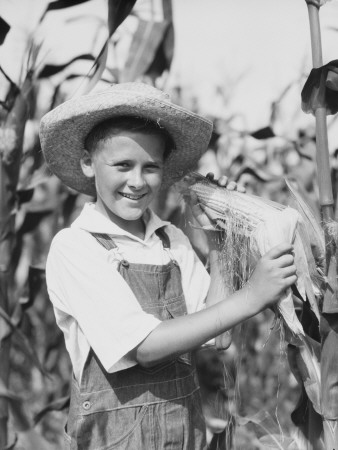
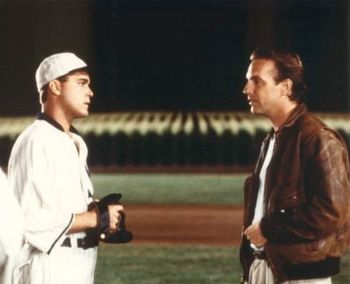
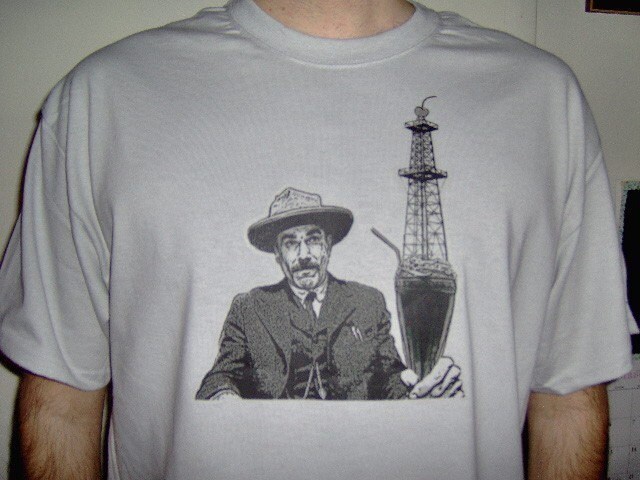
When I was a young'n and my oldest brother Phil was in high school, he and his friends took to calling me "Farmer Bill." I don't recall the exact reason, but I think it may have something to do with an old screen-printed T-shirt. Or maybe it was because my grandfather, a farmer, was named Bill, and at five years of age, I already resembled an old farmer. Or maybe it's because I was obsessed with big, loud things1 (like tractors) to the point where there's a photo of me in a miniature lawn chair watching my neighbors planting corn in the field across the road2.

Who knows where nicknames come from? Some names seem to be the product of a great namer in the sky, holding a pre-nicknamed divining rod over lists of names until they feel that unmistakable tug. But that doesn't make much sense. Then again, neither does anything I write. I digress...

Today's Great Name in Baseball is Robert Henry Ray, better known as Farmer Ray. Farmer was from Fort Lyon, Colorado, an unincorporated outpost in the foothills of the Rockies best known as a staging point for the Sand Creek Massacre4. Though there's no indication of it, Ray was almost certainly from an agricultural family, so there's no divining-rod mystery attached to his name. He was simply a farmer from a farm community whose baseball abilities took him all over the country in his twenties.

The good ol' Farmer first appeared in the Texas League in 1908, playing for both the Shreveport Pirates and Ft. Worth Panthers.

While his whereabouts in 1909 are not detailed and thus quite mysterious, the St. Louis Browns picked him up in 1910, which would turn out to be his only big-league season. He went 4-10 with a 3.58 ERA in that year, much worse than the Deadball Era average. As is well documented, the Browns if the Deadball Era were awful and 1910 was no exception: the team finished last in the American League with just 47 wins in 154 games. The team's leading hitter, Hall of Famer Bobby Wallace, batted a paltry .258/.324/.3235. A significant number of players on the roster were out of baseball after the season or a year or two after, including Farmer Ray, who had been merely a #4 starter on the worst team in the league.

In 1911, Farmer found himself playing for the Hartford Senators of the Connecticut State League, a league of surprising depth and good nomenclature. After 1911, Ray retreated to Texas, where he would spend (in order) two years with the Houston Buffaloes (Texas League), one with the Sherman Lions (Texas-Oklahoma League), one with the Sherman Hitters (Western Association) and his final season with the Denison Railroaders (Western Association). He generally found success in those leagues, though his stats from those years are incomplete.

After retiring from baseball in 1916, Farmer Ray abandoned his agrarian roots to work for Texaco, possibly in Electra, Texas, where he would die in 1963 at 76. Electra was the site of an oil discovery in 1911 and was growing around the time Ray hung up his spikes in nearby Denison6.

By random coincidence, Baseball-Reference's "Similarity Scores" rate Farmer Ray's Age-23 (and only season) as closest to the Age-23 season of one Oil Can Boyd. Maybe that divining rod was on to something.

But probably not.


1 I guess some things don't change. I still like things that are loud, big or both loud and big. Guess I should have been a civil engineer.

2 I was born, raised and played baseball in the rural Midwest. And yes, the pillars of my community congregated en masse mainly for basketball games, which, if I'm not mistaken, was where I was first referred to as "Farmer Bill." Which still doesn't make sense, because my name is not akin to "Bill" in any way. I blame a poor divining rod reading.

3 Not to be confused with (A) the character from World of Warcraft or (B) the main character of Field of Dreams, farmer Ray Kinsella3A. Both items are popular in google searches.

3A Not to be confused with Tim Kinsella.

4 The massacre has a disturbing parallel to several scenes from Cormac McCarthy's "Blood Meridian," which is one of the great unheralded pieces of American literature. Read it, but know that it is not a pretty or a nice novel.

5 To be fair, Bobby Wallace is generally not considered a Hall of Famer on the basis of his bat; he batted .268/.332/.358, though he accumulated 2,309 hits over 25 years. Rather, he was considered one of the finest defensive infielders of his era. Perhaps this set a precedent for other past defensive wizards to find their way into the Hall and for some at least one active glove man to have a chance at enshrinement. The point remains that Bobby Wallace probably shouldn't have led too many teams in hitting.

6 This is of course just some basic detective work and conjecture on my part, albeit it's likely more accurate than some of my previous conjecture6A.

6A But please indulge me as I speculate further. Working in the oil fields, it's only logical (according to that one movie I saw that one time) that Farmer Ray became a mighty captain of industry. As such, he certainly had nearly limitless amounts of power. While his records were all destroyed after the notorious Milkshake Murder of 1919, at least one author thinks that he may have had Baseball's Murder Machine Ossie Schrecengost's information stored on his speed-telegraph.