Wednesday, January 4, 2012

Chicken Wolf: Wait for it...


1889 was a promising year that turned wretched for many people. A naval battle between Germany and the U.S. was won by a cyclone. Vincent Van Gogh painted "Starry Night," but no one cared much. Henrietta Hitler gave birth to a poorly mustached baby named Adolf. The state of Montana was added to the union and, within minutes, residents formed at least 43 militias.

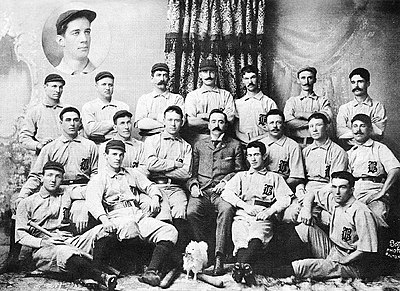
And in Louisville, the Colonels of baseball's American Association played one of the worst seasons in baseball, finishing with 27 wins and 111 losses. Responsible for approximately half of those outcomes was one of four player-managers, William "Chicken" Wolf1. Chicken played right field and was, however, one of the few bright spots as a player that season, batting .291/.333/.377.

Wolf, the youngest of seven children born to German immigrants, had grown up in Louisville and earned a roster spot with the hometown club in 1882. He mostly played the outfield and was an above-average hitter his entire career. In 1890, Chicken led a resurgent Colonels club to the American Association title by hitting .363/.421/.479.

William Wolf went by several nom de plumes2, including "Jimmie," though he earned the nickname Chicken because of his severe, irrational fear of poultry.

Like a typical baseballist of the era, Wolf managed his fear through doctor recommendations. As such, he was frequently heard to utter phrases interpreted as descriptions of hallucinations. Chicken never described any pink elephants, but teammate Skyrocket Smith wrote in his memoirs that Wolf often conversed with a flying canine in the dugout.

Wolf played in the last World Series between the National League and the American Association in his monstrous season of 1890. In the series, Chicken employed his then-famous tactic of hitting the baseball where opposing players weren't3, batting .389 and driving in 8 runs. Like all great postseason series, the 1890 classic ended in a tie. Wolf was unable to enjoy his postseason fruits of victory, which were, in fact, not fruit but rather whole chickens.

Wolf's career essentially ended with the collapse of the American Association after the 1891 season. He attempted to play for the St. Louis Browns of the national league in 1892, but he only played 3 games before being sent to the gulags.

On Easter Sunday in 1903, Wolf finally conquered his fear of poultry by vanquishing an entire 34-lb. turkey in one sitting. Unfortunately, the bird had been improperly cooked and Wolf contracted salmonella poisoning, thereby justifying his lifelong fear of delicious, delicious poultry. The turkey was his undoing, as he died in May of that year at the age of 41.

The coroner delighted in the ironic humor of the situation while writing Wolf's death certificate:

"Cause of death: Foul fowl."


Read Chicken Wolf's actual story here.


1 You can listen to a biographical account of Wolf's life here. You can also go here to learn the intricacies of the bass guitar and how it relates to 19th Century baseball. The host alleges it is "a lot of fun."

2 Nom de Plume is, of course, Swahili for "opening of Purgatory."

3 This philosophy was summed up best by baseball Hall of Famer Wee Willie Keeler when he said, "Strike the ball into the location that opposing baseballists do not occupy."

Friday, December 23, 2011

Steve Christmas to all, and to all holiday-inspired lethargy!

Dear Great Names in Baseball readers:

In lieu of our annual imaginary Christmas letter, please enjoy this epic poem account of Steve Christmas' lone major league home run as a member of the Chicago White Sox in September 19, 1984, contest against the Minnesota Twins.


'Twas the night of Steve Christmas, when all through the 'dome1
Most players were napping, just longing for home;
Much effort, most players would scarcely spend
As they waited for 1984's campaign to end2;
Mike Smithson took his tosses at the crest of the mound,
And in the dugout, Tony LaRussa wore a trademark frown.
Fisk wore his street shoes, while Marc Hill donned the gear,
And Kittle the DH cracked open a beer3.

When on the fake lawn there arose such a clatter,
Yet Twins fans scarcely bothered to see the matter.
Smithson swore loudly, as in a short burst
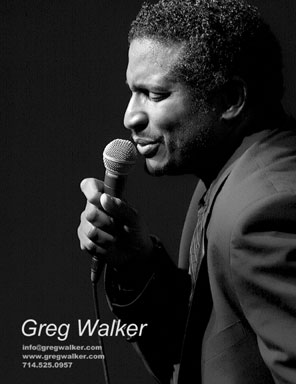
Greg Walker doubled home two runs in the first.
Bannister followed with four shutout innings,
But the ballgame, you see, was only beginning.
When, what to my wondering eyes should appear,
But a miniature sleigh, and eight tiny reindeer
,
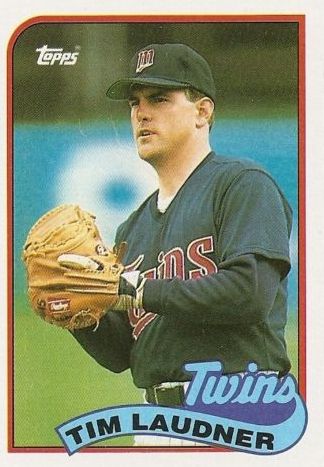
With Tim Laudner batting, neither lively nor quick,
The Twins evened the game with one stroke of his stick.

More rapid than eagles the scoring now came,
And the doers, some still remembered by name:
"Now, Jose Cruz! Now, Rudy Law! Now, Hairston and Baines!
On, Gaetti! On Teufel! Brunansky, more names!"
To the seventh, game tied, the Sox get two on;
But with two outs on whom would Tony summon?
When, what should appear to Sox fans so listless,
But backup-backup catcher Steve Christmas!
He strode to the plate to bat in a pinch,
To hopefully be the ballgame's ubermensch.

And soon, in a growling, I heard the ump call
That the count had two strikes and also three balls
As I went to the kitchen for a mid-game snack,
Smithson's pitch down the middle was met with a crack.
Christmas felt the impact, from his head to his foot,
And the ball sailed over the fence for now and for good.
Christmas rounded the bases for the first time that day,
While Kittle indifferently guzzled away.
His eyes -- how they twinkled! His dimples how merry!
His cheeks were like roses, his nose like a cherry!

Steve came to the dugout expecting hero praise,
But scarcely an eyebrow was seen to be raised.

He thought it to be a rookie prank of some kind,
But the season's disappointment soon changed his mind.
Kittle had a broad face and a little round belly,
That shook, when he laughed like a bowlful of jelly.
Christmas sat down beside him as the Sox scored again,
Hoping Kittle would maybe become a new friend.
But Ron had seen enough kids play and flop,
To waste his breath on this young backstop.
He spoke not a word, but went straight to his work,
Of emptying his Budweiser and acting a jerk.

And just when Christmas thought he'd get no joy,
Fisk finally sauntered over to give an "attaboy."
Then Kittle caved and Christmas cheered Bannister
And Ronny boy offered to split a brew cannister.
Chicago held on to win by four tallies,
In what would be the last Christmas rally.
But I heard Kittle say, ere to the minors he sinks,
Steve Christmas to all, and to all have a drink!


1 The Hubert H. Humphrey Metrodome, once home to the Minnesota Twins, the Minnesota Vikings, the University of Minnesota football team and hearing loss

2 The White Sox 1984 season was a letdown after the Sox won the American League West title in 1983.

3 There is no indication that Ron Kittle ever drank in the dugout or during a game. But since he went 0-4 with 4 strikeouts in this game, I'm taking some creative liberties with the game's narrative. It's not unheard of.

Thursday, December 22, 2011

Rollie Fingers: Hall of Fame Haiku, Vol. 2 (Electric Bugaloo)


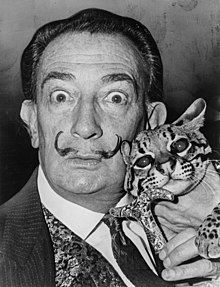
Roland Glen Fingers was a Hall of Fame relief pitcher, and, as such, countless words have been written about his career and his legacy. An equal number of words have been written about his Salvador-Dali-meets-Frank-Zappa mustache, which is an inspiration to gross-looking hipsters the world over. Feel free to peruse the Interwebs for more on Rollie Fingers' career, facial hair and tax-dodging allegations.

For the time being, let us consider that Fingers was the progenitor of unique facial hair among relief pitchers. Many have tried to emulate Fingers' style, but few have succeeded. And some have failed miserably, as this twice-updated blog pointed out in 2009.

And so we bring forth our second volume of GNIB's Hall of Fame Haiku for Rollie Fingers (Click for Volume 1):


Language lessons
W is win;
It's written on Rollie's face
Only with more twists.


Man of the year
I don't need Rolaids,
To spell the first bullpen ace.
I just need Fingers.

Sunday, December 4, 2011

Lance Berkman: Big Puma or Fat Elvis?


Hi, everybody! Steve here – I’ve not been holding up my end of the GNIB deal, so I’ve decided to awaken from my slumber with a dual-nickname extravaganza! Given that GNIB (read: Eric) has focused on the amazing names from the distant past, I decided it might also be nice to keep the contemporary baseball fan involved.

With that in mind, I present Exhibit A: William Lance Berkman. Mr. Berkman is a baseball playing guy for the St. Louis Cardinals. He was born in Texas, played high school ball in Texas, moved onto college ball in Texas, and then was drafted by the Houston Astros. He’s as Texas as Hank Hill and, clearly, he is not to be messed with1.

As it turns out, Lance Berkman is extremely good at hitting baseballs. He’s put up video game numbers2 at pretty much every level, including the majors. Berkman has a career slash line of .296/.409/.545 and OPS+ of 146 in his 13-season career with the Astros, Yankees, and Cardinals. Wowza!

But of course, as a contemporary baseball fan, you know all about Lance Berkman’s baseballing prowess. So let’s get down to business – how did this man end up with two fantastic nicknames in an era where even some of the biggest stars have crappy nicknames derived from the initials-and-syllables formula?

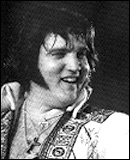
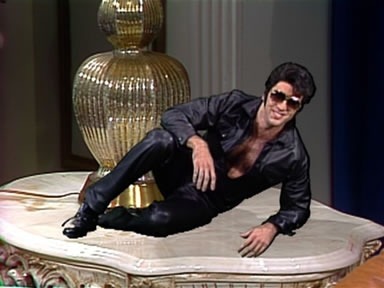
Well, let’s begin with Fat Elvis. It’s a simple enough explanation – he has an uncanny resemblance to Elvis Presley during his later, more rotund days3. This is particularly evident when smirking, as they have similar eyes/nose/cheeks. Here are a couple photos for your comparative viewing – one of Elvis and one of Lance. I know what you’re thinking – when did Lance Berkman enter an Elvis lookalike contest4 and when did Elvis Presley play professional baseball?

Obviously that nickname makes sense. So, then, where does he pick up the moniker Big Puma? Well, by giving himself the nickname – sort of. Apparently in addressing his Fat Elvis nickname on a Houston radio show, Berkman said "I'm more like a puma, so I'm not sure why people call me Fat Elvis." The hosts ran with it and it caught on5.
What’s the final word? Well, I choose Fat Elvis for two reasons; 1) he’s delusional if he isn’t sure why people call him Fat Elvis, because he’s a dead ringer; and 2) no person, not even Lance Berkman, is allowed to give himself a nickname. However, this is just one man’s opinion – feel free to voice your own thoughts in the comments section!

1 In fact, if you believe Little Texas6, you might even submit that God blessed his origins, and by extension, him. And given how religious Mr. Berkman is, that seems reasonable.

2 People usually say “PlayStation numbers,” but I feel that’s discriminatory against people like me who don’t own anything newer than a Sega Genesis.

3 In reality, Lance Berkman is certainly heavier than young Elvis, but decidedly more trim than the later fat Elvis. Should we really be calling him “Fat Young Elvis” or “Skinny Fat Elvis” instead? Or maybe even Tiny Elvis?

4 And while we're talking about lookalikes, I think Elvis in the 1970s was actually in a Neil Diamond lookalike contest.

5 I did a significant amount of investigation, none of which revealed any physical resemblance between an actual puma and Lance Berkman.

6 Yeah, that's right, a digression away from a digression. I just wanted to note that if you happened to go to middle school where I did, you probably remember that Little Texas song from running laps in gym class. Still no explanation as to why it was played.

Thursday, December 1, 2011

Rolla Mapel: Great Names in Small Missouri Towns


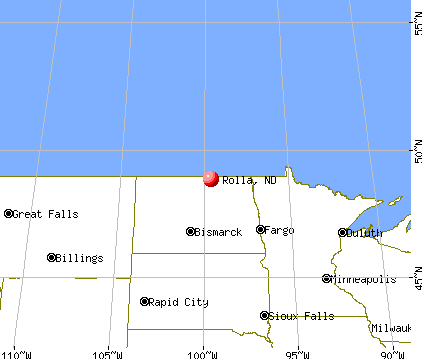
Today, Great Names in Baseball explores new ground, both literally and figuratively. Inspired by coffee-cupper Rolla Mapel, we shall examine the names of a series of small towns in the middle-American state of Missouri.

Rolla Mapel was born in Lee's Summit, Missouri, in 1890. His parents, ever homesick for their city of origin1, named the boy after their hometown of Rolla, Missouri. Rolla Mapel would eventually pitch in several leagues of the Great Plains before starting four games for the stinky St. Louis Browns in 1919. His only claim to fame in baseball is that the Browns turned a triple play in his debut, something that would only happen again in 2002 to Dewon Brazelton. He died in 1966 in a far-flung land called "San Diego."

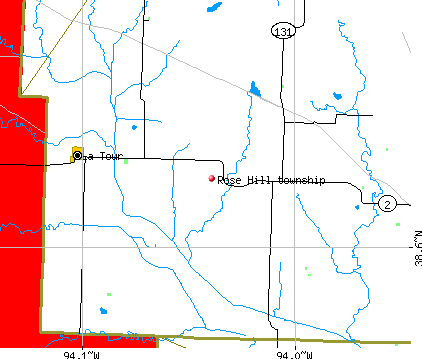
But none of that baseball crap matters. Instead, we'll trace a possible route2 of Rolla's young parents on their journey through the villages of central Missouri en route to a new life in the shadow of Kansas City.


Rolla - (Pop. 19,000 or so) Mapels' journey began here. This city was allegedly named after a bloodthirsty hunting dog. Or it was named by people who had immigrated there from the capital city of North Carolina. Either story is disappointing when one considers that the town was nearly named Hardscrabble. Rolla is home to Missouri S&T and Tom Shipley of Brewer & Shipley. It is also the birthing place of gold-medal gymnasticist Shannon Miller, about whom nobody cared after seeing the gutsy and in-every-Olympic-highlight-film-of-all-time performance of Kerri Strug in 1996. Permission to weep nostalgic and patriotic tears of joy: Granted.

Town name rating: I am disappoint. I repeat: It could have been called Hardscrabble!


Meta - (Pop. 249) This town is so its-name that it's actually another city called Babbtown. The account of the Mapels' journey that I am fabricating as I write tells of how every conversation in Meta is so self-referential that nobody in the town actually knows anything about anything.

Town name rating: This is not a town name rating.


Climax Springs - (Pop. 80) This village is named after a factory in its confines that makes components for erotic mattresses. Because this hack writer is using a computer at his day job and is terrified of what search engines may retrieve, no more information will be provided. According to some outside sources, however, this is the second-most Not-Safe-For-Work (NSFW) municipality in Camden County.

Town name rating: 3-1/2 Magic Fingers


Warsaw - (Pop. 2000) Warsaw has recorded both the highest temperature (118 degrees in 1954) in the state and the lowest (-40 degrees in 1905). At least one Wikipedia editor claims the city is often referred to as "The Gateway to the South." Warsaw's annual Christmas celebration falls on December 3 (that's tomorrow) this year. The festivities will include a performance from country musicians/convicted train robbers The Osage Outlaws at the community center [**Disclaimer: This is not indended to be a factual statement**]3. Citizens have heard repeatedly that LOT Airlines will fly there once a day, but so far they haven't seen a damn jet anywhere near Warsaw Municipal Airport.

Town name rating: Poland? Now you're just making places up.


Tightwad - (Pop. 64) While the claim is unconfirmed, Tightwad may be the only community named after a bartering bait-and-switch that involved a watermelon, a chicken and a postman. It is also home to a niche-market novelty bank.

Town name rating: Clearly worth a watermelon. Remember: When you control(led the mail in the mid-19th century), you control(led)...the names of backwater towns!


La Tour - (Pop. 60) La Tour is a community that, in 2000, voted to disincorporate the village. The village had been incorporated in 1968 in an inspired bid to "take the whole town on tour" as a traveling musical act: The La Tour of del Mundo World. The group/village canceled their first show 35 minutes after leaving town when they received word from their neighbor Rose Hill that La Tour had been ransacked by The Osage Outlaws, who had lain in wait for weeks after hearing promotional radio ads for the tour. Their idea would later be actualized when the Polyphonic Spree took the city of Dallas on tour in 2001.

Town name rating: The story of La Tour is a bit of a stretch, if I'm honest.


Gunn City - (Pop. ??) No Wikipedia entry exists for Gunn City, but sources say that gunfights break out regularly there. Gunn City resident Conrad Durham is said to have been shot in the Gunn City Lutheran Church's belltower and fallen to an indeterminate place in town at least 374 times. Visitors be warned: A salty attitude will get a feller punched, but Gunn City ain't got no room for nice guys, neither.

Town name rating: In a state with lax policies on firearms, anyplace called "Gunn City" is essentially the state's cerebral cortex.


Lone Jack - (Pop. 528) This small city is famous for a Civil War battle that raged in the town's streets for five hours. The municipality was founded by Jack Sparrow (any resemblance to film characters is purely coincidental), who first settled the area as a bachelor in 1813. Legend has it that Sparrow defended his cabin from a badger infestation using only meager rations, a box of bullets and his wits. Sparrow died while fording a river.

Town name rating: 2 spare wagon tongues or 357 pounds of food


Lee's Summit - (Pop. 91,000) Notable for having the mockumentary "Jesus Camp" filmed there, in part. It's also home to rapper and linguistic curiosity Tech N9ne. Tech N9ne's 1999 debut included a track called "Mizzizy Gets Bizzy," a tribute to the products made in Climax Springs.

Town name rating: Tutonka


1 I actually have no way of knowing that Rolla Mapels' parents were from Rolla, Missouri. Consider it an intellectual leap taken with creative license. Like a biopic.

2 There is no way of knowing if the roads on the above-pictured route even existed, as Missouri records do not pre-date 1951. Many of the roads, however, show clear evidence of having been built by the Romans. Rome conquered Missouri, right?

3 To reiterate: Everything on this blog is meant as hyperbole. Anything that resembles a fact is patently false. If you enjoy historically inaccurate writing commonly taken as fact, please consider reading this book.

Wednesday, November 30, 2011

Sweetbread Bailey: Presidents and Pastries (In it for the dough)...

...which is also the title of my new band's debut release. It's a mix of early New Wave dance beats with underpinnings of pop art and minimalism. Our biggest influences are Jean-Paul Sartre, ironic mustaches and money from our suburban dads. And we all dress like it's 1983, which is actually 8 years before we were born. Our live performances are eye-opening, but the bourgeoise types wouldn't get it. We haven't had our record reviewed by Pitchfork yet, but we're confident it will score at least a 7.6.

Wait, what?

This is a baseball blog. Ostensibly, anyway. Sometimes I write a little bit and then discover that it's clever and I digress. Imagine that: A self-indulgent blog1. But we'll save that discussion for a later, much more self-referential post.

Today's GNIB post covers the life and times of Abraham Lincoln Bailey, a native of the, well, Land of Lincoln. That's hardly surprising, I guess; Illinois has an infatuation for the 16th commander in chief. The name puts in him some good company with other players named after presidents.

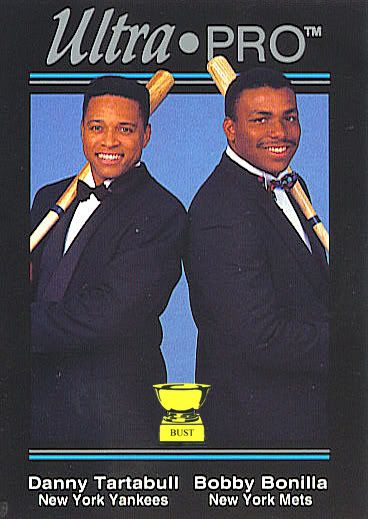
But Abe Bailey actually played under the auspices of Sweetbread Bailey, a name which adds him to the All-Time Pastry Team: Cookie Lavagetto, Pie Traynor, Jim "Cakes" Palmer, Doughnut Bill Carrick, Danny Tartabull, minor leaguer Christopher Danish, minor leaguer Russell Loafman and Baklava Van Troy.

As a young phenom in Joliet, Sweetbread passed up an opportunity to pitch for the Chicago Cubs in 1917, instead serving in World War I with the 72nd Field Artillery in the army2. Upon returning, however, the Cubs signed him to pitch for the club. Bailey pitched in relief for the Chicago Cubs from 1919 to 1921, when he was traded to the Brooklyn Robins. His career was over after the 1921 season.

Sadly, Bailey died in 1939 at the young age of 44 in the same town in which he was born. Naturally, coffee and sweet rolls were served after the burial.


1 If your blog isn't sufficiently self-involved, then you're doing it wrong.

2 Bailey is alleged to have invented the bread helmet during the Great War, a device that would not gain popularity for nearly another 100 years.

Thursday, November 17, 2011

Amos Rusie: The Hoosier Thunderbolt


Honors for the Hoosier Thunderbolt1 in three hastily-hewn haiku2:


Tavern

One Thunderbolt please.
Don't skimp on the gin, either.
Two dimes for the 'keep3.


Inning

The Amos Rusie--
Flail at one, two, three fastballs.
Repeat and again.


Regimen

Spring training's arrived.
How 'bout a drink or seven?
He's as good as e'er.


Read about Amos Rusie's drinking baseball exploits here.


1 This sounds like a much better name for a train line than the Hoosier State. Mitch Daniels, forget all that government crap and legislative process and so forth. Make this a priority.

2 The plural of haiku is haiku. Also, this hack writer is terrible at creating them.

3 Rusie's grand moniker led to a drink of the same name. While research does not turn up any information on a recipe, it's probably safe to assume it had gin in it.

Wednesday, November 16, 2011

Studs Bancker: Investing in pain


John V. "Studs" Bancker played during the year when New Haven had a professional baseball team and that professional baseball team was called the Elm Citys.

Studs fancied himself a catcher and an infielder, though he was a not regular starter on the 1875 club and in fact was a poor hitter.

After his sole season in professional ball, Bancker worked successfully in private securities. And by this, I mean that he wielded a cudgel, which he used to break debtors' extremities.

It's rumored that 11-year-old Philadelphian Ossee Schrecengost once watched Studs go 3-for-3 on a trio of downcast gamblers. Young Ossee remembered that day and frequently described it in wistful tones after a few servings of pitcher's juice.

Studs Bancker died of dysentery in 1888 at 35, having collected a record-high 3,762 kneecap hits.

Friday, November 11, 2011

Lou Skizas: Slugger, time traveler, sound investor


Lou Skizas ostensibly earned his nickname "The Nervous Greek" from a lengthy routine he performed before each at-bat. The Chicagoan outfielder's ritual makes Nomar Garciaparra's pre-batting routine look like Warren Newson's, if you know what I mean.

However, in a rare and completely fabricated interview, Skizas disclosed that he actually picked up the nickname after constantly mumbling to his 1950s teammates about the financial crisis striking his homeland1...in 2010.

Teammates dismissed his ramblings as incoherent babbling and a nervous tic. But Skizas HAD traveled to the future, thanks to a clever device obtained from the back of a cheesy science fiction paperback. While in the future, Lou visited with his still-alive self in 20112 and returned to the 1950s to tell of the great embarrassments suffered by the Greek people in the 21st Century.

After many years of arguing about the future, Lou realized no one would ever believe him, so he settled in to everyday, post-baseball life. He earned a PhD in biology and taught at Illinois State University and the University of Illinois, where he also coached the baseball team.

He's since retired from teaching, though he at times worked a scout for the Chicago Cubs. Today, Skizas lives near Chicago somewhere, sitting on top of a pile of money he's made on sports betting, thanks to a sports almanac he's kept under his pillow for 55 years.

Read Lou Skizas' actual story here.


1 Actually, Skizas' homeland was Chicago, though his parents had immigrated from Greece.

2 The astute reader will mention paradoxes here. The author wonders why this interrupts your suspension of disbelief, but you can believe the plot of any episode of Doctor Who. Sure, it's fine when writers pull magical sci-fi crap to whitewash poor plot planning, but when someone tries to create a fictional account of a real person's life, it becomes unacceptable. Well screw you! We don't need you anyway2A!

2A Please don't stop reading. Although if you do stop reading, our sponsor will send hooligans to your front door with bar mallets in hand.

Thursday, November 10, 2011

Elton Chamberlain: Cool as Ice*

Elton "Ice Box" Chamberlain may have been the original mold for the late nineteenth century baseballist. A sturdy and reliable pitcher for 10 years, Ice Box picked up his nickname from hyperbolic scribes' descriptions of his coolness in the pitcher's box1. In 10 seasons, he won 157 games and was an above-average pitcher in an era where offense ruled the game. He even pitched with his left hand on occasion, an accomplishment also undertaken by one of Chamberlain's contemporaries: lady killer and GNIB honoree Tony Mullane.

In addition to his pitching credibility, Ice Box engaged in all of the traditional, unsavory baseballist off-field engagements of the times.

He bet heavily on boxing. Of course, this is not in itself a crime. But Chamberlain netted himself a hefty $50 (!) fine for helping fix a match in 1891. In another match, Ice Box won a diamond ring from a bet on brawler Edward Gorman. Like any good bettor, Chamberlain lent Gorman the ring. After it became apparent that the ring was never coming back, Ice Box had Gorman arrested and jailed for grand larceny2.

Of course, the natural post-career appointment for a man of such repute is self-evident: Ice Box was hired to be a National League umpire in the 1896 offseason. While the reason is unclear, the result is not. Chamberlain was fired before long.

Not only was Chamberlain a fisticuffs fan, he fancied the occasional participation in what can only be dubbed "assault and battery for fun and profit."

In one instance, Cincinnati teammate and outfielder Jocko Halligan ravaged a bar during what baseball historians have determined "an ordinary baseballist's Thursday." After battering one teammate into a pulp, Halligan3 spotted Chamberlain at the bar and decided that a doubleheader was in order. Ice Box, however, was watching Halligan's approach in the bar mirror. As Jocko lunged, Ice Box turned with a bar mallet4 in hand and coolly dispatched of the raging outfielder.

Ice Box's post-baseball life is not at all documented, outside of his death in 1929. Some say that he worked in a consulting role with baseball hatchet-man extraordinaire Ossee Schrecengost and that he once began a brawl in Cleveland that ended 390 miles away.

All we know is...he's called a prick.

Read the SABR Project bio of Ice Box Chamberlain here.


* For information on this article post's title, rent Cool as Ice (1991), starring award-winning human being Vanilla Ice. Also, please take a moment to enjoy Ice Box Chamberlain's baseball card, presented by Old Judge Cigarettes. Remember kids, Old Judge Cigarettes wrote THE verdict in smoothness.

1 A thorough researching has indicated that rejected nicknames included: Iceberg Spleen, Glacial Glands, Winter Worm, Nattering Nabob of Numbness, Chisel Cheeks and The Rimy Buffalo Hurler.

2 Ed Gorman once defeated a Kiwi world champion named Torpedo Billy Murphy in 1891 in Rock Springs, Wyoming. He also allegedly won a 53-round bout with Billy Hawkins in Chicago by forfeit, though at least one press outfit claimed the fight was a canard. This author finds the claim confusing and dubious, for airplanes had yet to fly, let alone planes with complex aerodynamic surfaces.

3 Jocko was a common enough nickname in baseball. For more information on Halligan's story, please see his succinct entry in the SABR encyclopedia.

4 Can anyone tell me what a bar mallet is, by the way? All of my research indicates that it was either a golf club or a piece of percussion equipment. Because I don't want to venture off on a tangent of a tangent about why he was carrying a golf club or percussion equipment4A, I'll just assume that a bar mallet is a
10-lb. hammer (because Nine-Pound Hammers are for hillbillies), which Ice Box carried with him because Ohio state laws permit concealed carrying of large, blunt objects for just such occasions.

4A Actually, that's never stopped this author from supposition. However, in this instance, I can find no other reason why a roughshod baseballist would carry such items other than to flog his opponents in battle. Chamberlain certainly was not a purveyor of gentlemanly pursuits like golf, nor was he inclined to song, save the dull, rhythmic thudding of a melee.